
Power has long been the dominant concern in data center conversations – the proverbial ‘long pole in the tent.’ But the tent keeps getting bigger, and so does the growing opposition.
The cloud, as it turns out, has to touch ground somewhere. But it seems many of the people who live there are increasingly saying: not here.
A Data Center Watch report found that $98 billion in projects were blocked or delayed from late March through June 2025 alone – exceeding the $64 billion blocked during the entire 16 months prior. Since then, the resistance has only accelerated, with tech’s biggest names forced into retreat.
These include:
Tucson, Arizona – The City Council unanimously opposed a $3.6 billion Amazon data center, citing water scarcity concerns in an already drought-stricken region.
Indianapolis – In September, before a scheduled vote, Google withdrew its $1 billion proposal for 468 acres in Franklin Township. This came after the “Protect Franklin Township” group had spent months organizing around water consumption and environmental risks, making it clear Google wasn’t welcome.
Prince George’s County, Maryland Also in September after a proposed data center sparked a petition with over 20,000 signatures, county officials imposed a moratorium on all new permits while a task force develops comprehensive recommendations.
Wisconsin Also in September, Microsoft pulled plans for a 244-acre facility in Caledonia, WI after fierce local opposition. Ironic given Microsoft is currently building another data center just 20 miles away in Mount Pleasant, WI. Caledonia residents drew their line. At a July commission meeting, 21 speakers voiced concerns about preserving agricultural land and wetlands. A Facebook opposition group formed within minutes and quickly gathered hundreds of members. Microsoft withdrew the application before reaching a vote.
Finally, in Data Center Alley itself – Northern Virginia – 42 activist groups now campaign against further development.
While electricity concerns remains central – particularly fears about grid strain and rising utility bills – communities are now mobilizing around multiple grievances. These include (but are not limited to): water scarcity, minimal long term job creation and environmental degradation.
What makes this movement remarkable is its bipartisan nature. Environmental activists on the left find common cause with fiscal conservatives on the right who balk at corporate tax breaks. This cross-partisan alignment has proven quite effective. According to Data Center Watch, opposition groups successfully block or delay two out of every three projects they protest.
This la force nait de la resistance attitude from communities is evolving into something more significant – a genuine bottleneck threatening AI infrastructure deployment. Communities have discovered their collective power to say ‘NO’ precisely when tech companies need power and land access most desperately.
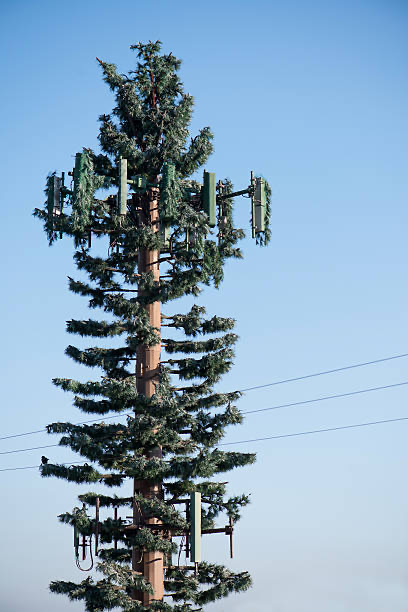
Interestingly, the tower companies experienced a similar push back early in the wireless infrastructure cycle. However, while both sectors (data centers and towers) ran into NIMBYA issues it is not exactly an apples-to-apples comparison given the lack of environmental concerns around towers. The community push back the towers faced were more related to the aesthetic appeal (or lack there of!) of such structures. To navigate this, tower companies got creative and very practical! From a practical standpoint, they quickly built up their internal local government and community affairs staffing. From a more ‘think out of the box’ standpoint, the camouflaged tower tree (see image) was born! Such creativity may be a harder lift for a data center…..
But, in light of recent events, it is becoming very clear hyperscalers and the data centers which support them need to begin to figure out tangible solutions here. While 2026 guidance has not yet been given, all hyperscalers have signaled a further ramp capital expenditure plans to meet surging AI demand. However, if NIMBY resistance continues to build through 2026 and beyond, it may be that more capital will flow to lawyers than to the players holding the picks and shovels to get these facilities up and working.
Our sense is the data centers very much understand a pointed and targeted PR reach out is needed. Exhibit A, B, C and D may be Digital Realty’s recent appearance on the Today Show. (Link here: https://www.youtube.com/watch?v=KiRTHEV7wpo)
Goodbye CNBC – Hello Morning Show!
Source: Data Center Dynamics